Most of downtown Snoqualmie lies in the Snoqualmie River floodplain, and when water reaches a basement or crawl space, mold can follow within a day or two if materials are not dried. Ridge-top neighborhoods face slower problems such as condensation and roof leaks. Call the number on this page to be connected with a local mold remediation company in Snoqualmie.
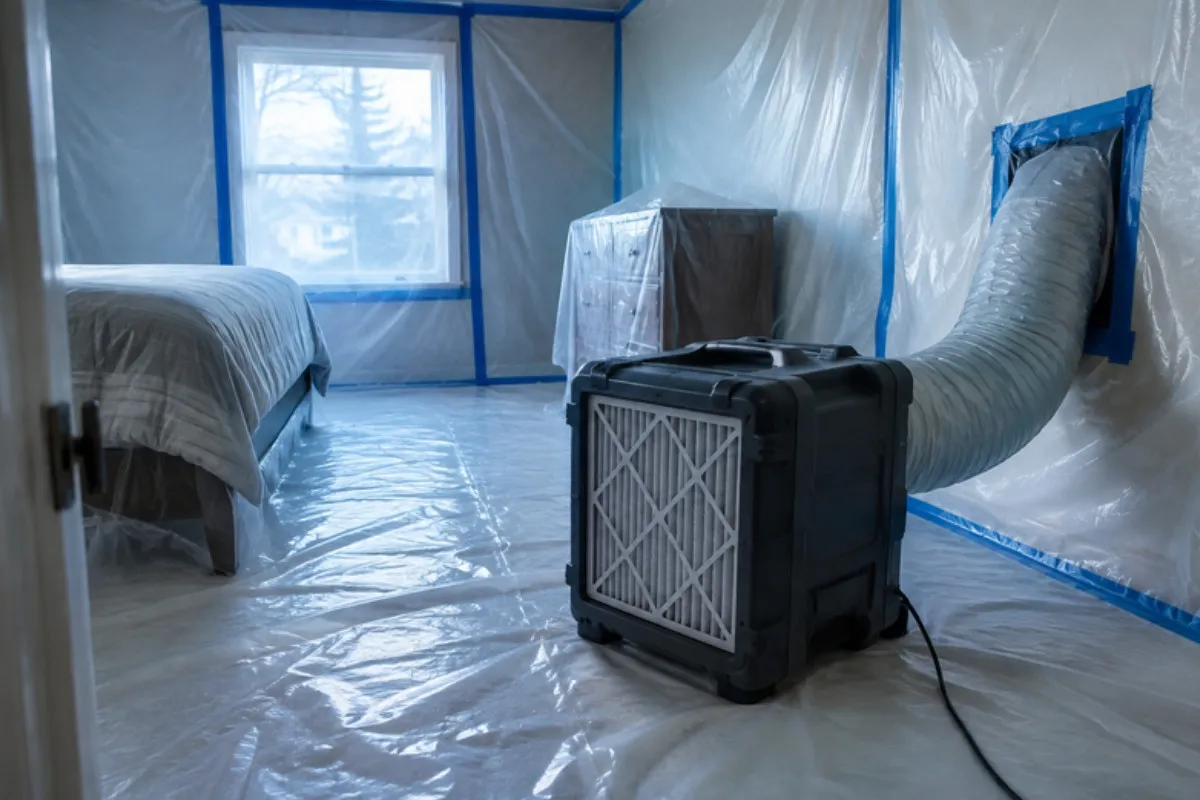
Mold services in Snoqualmie
A river town on the valley floor
Snoqualmie is a King County city about 25 miles east of Seattle. Its downtown sits on the flat valley floor, and the city says most of it lies within the Snoqualmie River floodplain. Kimball Creek, a tributary, runs through town and backs up when the river is high, so water collects on low ground around SE River Street, Reinig Road and the Meadowbrook area even without the river itself overtopping.
The record is long. The November 1990 flood was the worst in the city's known history. Repetitive-loss claims cluster around the 2006 and 2009 floods, with January 2009 the last major one before the December 2025 atmospheric river flooding, when the river near Snoqualmie came close to the 1990 peak and a large area went under water. The city counts 373 properties in four repetitive-loss areas.
Why foundations matter here
In those repetitive-loss areas, basements and crawl spaces are the main foundation types and slabs are uncommon. That means floodwater sits under and inside homes where it is hard to reach and slow to dry. Elevating homes has been the most common way owners protect houses in Snoqualmie. Newer neighborhoods on higher ground skew young, with a median home built in 2006, but tight modern houses still grow mold from bath moisture, attic condensation and roof or window leaks.
After high water
- Wait until it is safe to enter, then photograph everything for insurance. The city notes standard homeowner policies do not cover flood damage.
- Clean and disinfect everything that got wet; city guidance warns flood mud can carry sewage and chemicals.
- Get wet drywall, insulation and carpet out and start drying within 24 to 48 hours, as EPA advises.
- Keep children out of the cleanup and wear at least an N-95 respirator, per EPA.
Permits, complaints and health
The City of Snoqualmie Building Division, part of Community Development, issues building permits. Rebuilding flood-damaged walls, floors or systems usually needs one, while the mold cleanup itself is not described as permitted work. Code concerns, including a rental with an unrepaired leak, go to Community Development through the city's Report a Concern form after the tenant has given the landlord written notice. Public Health - Seattle & King County offers consultations on indoor air quality and mold concerns.
When you call, an independent local company can assess the damage and plan removal and drying. Washington has no state mold license, so check the company's registration with Washington L&I on the Verify a Contractor tool.
Common questions in Snoqualmie
How fast does mold grow after a Snoqualmie flood?
Does homeowners insurance cover flood-related mold in Snoqualmie?
Do I need a permit to rebuild after flood mold removal?
Why do homes on the valley floor flood even when the river stays in its banks?
Nearby cities and towns
Sources
- City of Snoqualmie: 2023-2024 Flood Report
- City of Snoqualmie: Draft 2024 Repetitive Loss Area Analysis
- King County: Snoqualmie-Skykomish December 2025 flood overview (pdf)
- City-Data: Snoqualmie, WA houses and residents
- City of Snoqualmie: Building Division
- City of Snoqualmie: Community Development
- King County Directory: Indoor air quality consultations, Public Health - Seattle & King County
- EPA: Homeowner's and Renter's Guide to Mold Cleanup After Disasters (pdf)
- L&I: Verify a Contractor, Tradesperson or Business
- Washington DOH: Identifying an Unknown Indoor Air Quality Problem (hiring a contractor)
Last updated: