Mold Removal Seattle is a free referral service, not a mold company, and it has no crews or inspectors of its own. When you call, you are routed to an independent local mold remediation company or mold inspector serving your area, who discusses the problem with you and sets their own price. Call the number on this page to be connected with a local mold remediation company in Seattle.
Mold services in Seattle
How the call works
Dialing the number on this page connects you with an independent business that handles mold jobs in the Seattle area. Before calling, note where the growth is, roughly how large it looks, what got wet (a roof drip, a plumbing leak, seepage through a foundation wall, condensation) and how long it has been damp. The company you reach decides whether a site visit makes sense, explains its approach and gives you its own quote. You are not obligated to hire anyone, and the terms of any job are between you and that company.
Why Puget Sound houses stay damp
From about October through April the region sees mild, gray, drizzly weather that keeps framing, drywall and insulation from drying out on their own. In winter, warm indoor air meets cold windows and exterior walls and condenses, which is why closed-up bedrooms and closets so often show mildew. Many older homes sit over vented crawl spaces or have daylight basements cut into hillsides, where groundwater can seep through below-grade walls. Attics collect moisture when bath fans vent into them or ventilation is poor, leaving dark stains on roof sheathing.
Flooding happens too. On December 27, 2022, a king tide pushed the tidally influenced Duwamish River over its banks in South Park, flooding numerous homes and businesses. King County's flood services program runs a warning system for several county rivers and publishes floodplain, channel-migration and landslide hazard maps worth checking before you buy.
The Washington Department of Health and EPA give the same starting advice: dry water-damaged materials within 24 to 48 hours and fix the moisture source, because no house can be made free of every spore. A dry home is the goal.
Inspection and removal are separate tasks
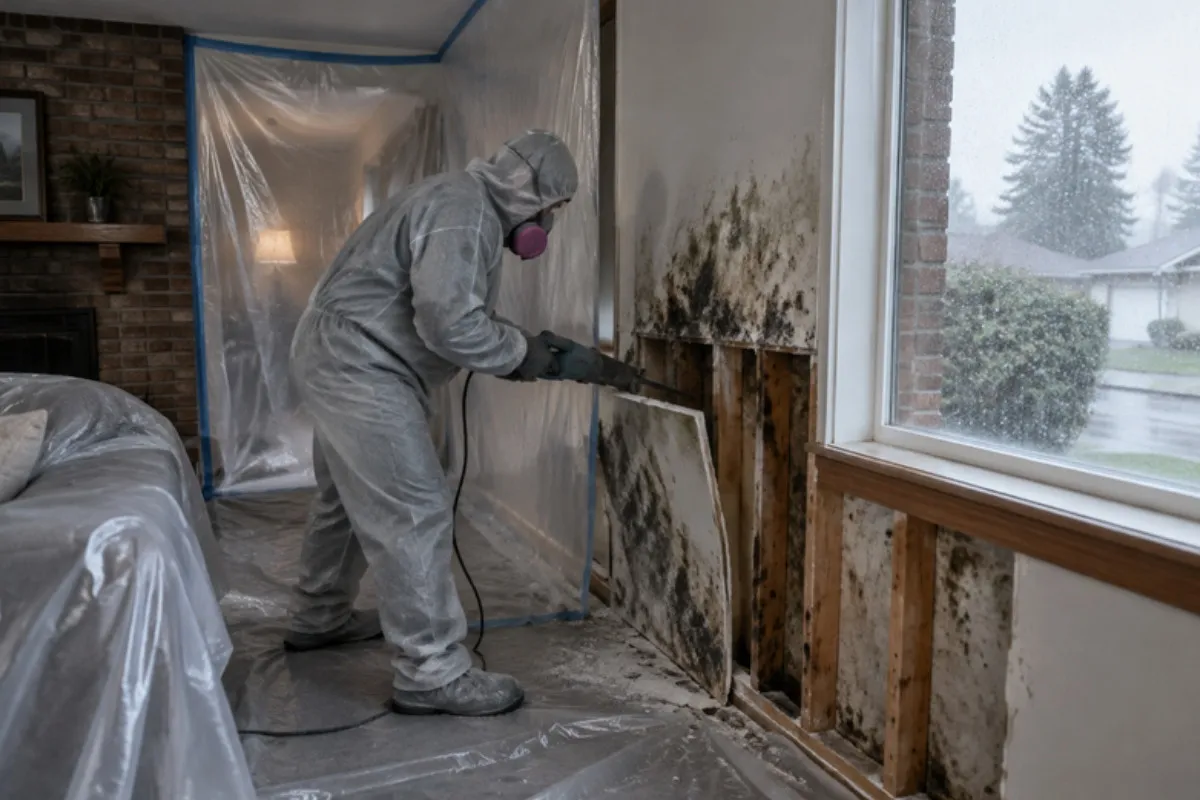
An inspector looks for moisture and growth, finds where the water is getting in and writes up what has to go. Removal (remediation) is the hands-on part: containing the work zone, cutting out moldy drywall, insulation or carpet, cleaning the framing and drying it before anything is rebuilt. EPA says sampling is usually unnecessary when mold is visible, and there are no federal limits for spores. Washington does not require the inspector and the remover to be different companies, but Angi recommends separate firms, and an independent inspector gives you an assessment and a final check from someone with nothing to gain from a bigger job.
What it costs in Seattle
| Area of the home (Angi's Seattle cost guide) | Typical range |
|---|---|
| Overall remediation job | $1,008 to $2,967 (average $1,988) |
| Crawl space | $425 to $1,650 |
| Basement | $425 to $2,475 |
| Attic | $825 to $3,300 |
| Wall | $825 to $16,550 |
Angi reports most Seattle pros charge $10 to $25 per square foot. Price moves with the size of the affected area, how much material has to come out, how tight the crawl space or attic is and whether ductwork or rebuild is included.
Washington has no mold license
The Department of Health says Washington has no state certification for mold work, so anyone can call themselves a mold specialist. What the state does require is that anyone repairing a building be registered with Washington L&I as a construction contractor. Look the company up on L&I's Verify a Contractor tool, which also shows bond claims and citations. Voluntary IICRC training is a plus, not a guarantee.
If you rent
This is general information, not legal advice. Under RCW 59.18, landlords must keep a unit reasonably weathertight and give tenants Department of Health-approved information about mold. Tenants give written notice of a problem, and the law sets times for the landlord to begin repairs. In Seattle, most rentals must register with SDCI under the Rental Registration and Inspection Ordinance (RRIO), and renters whose landlord will not make repairs can contact SDCI Code Compliance.
Where calls are connected
The service covers Seattle and King County along with Snohomish, Pierce, Kitsap, Island, Mason and Jefferson counties. On health, EPA says mold can irritate the eyes, skin, nose, throat and lungs, and people with asthma or weakened immune systems should stay away from moldy areas. Talk with a health professional about any health concerns.
Cities and towns we connect callers in
King County
Snohomish County
Pierce County
Kitsap County
Island County
Mason County
Jefferson County
Common questions
Is Mold Removal Seattle a mold company?
Does Washington require a mold license?
How much mold can I clean up on my own?
Which areas does the service cover?
Guides
Sources
- EPA: Mold Cleanup in Your Home
- EPA: A Brief Guide to Mold, Moisture and Your Home
- EPA: Mold Information Slideshow (testing and sampling)
- Washington State Department of Health: Mold
- Washington State Department of Health: Hiring a Contractor (indoor air)
- Washington State Department of Health: Renters, Landlords and Mold
- Washington L&I: Register as a Contractor
- Washington L&I: Verify a Contractor
- RCW 59.18.060: Landlord duties
- RCW 59.18.070: Landlord failure to carry out duties
- Seattle SDCI: Rental Registration and Inspection Ordinance, renters
- Angi: Mold Remediation Cost in Seattle
- Angi: How to Hire a Mold Remediation Company
- King County: Flood services
- Seattle Public Utilities: statement on South Park flooding (Dec. 2022)
Last updated: