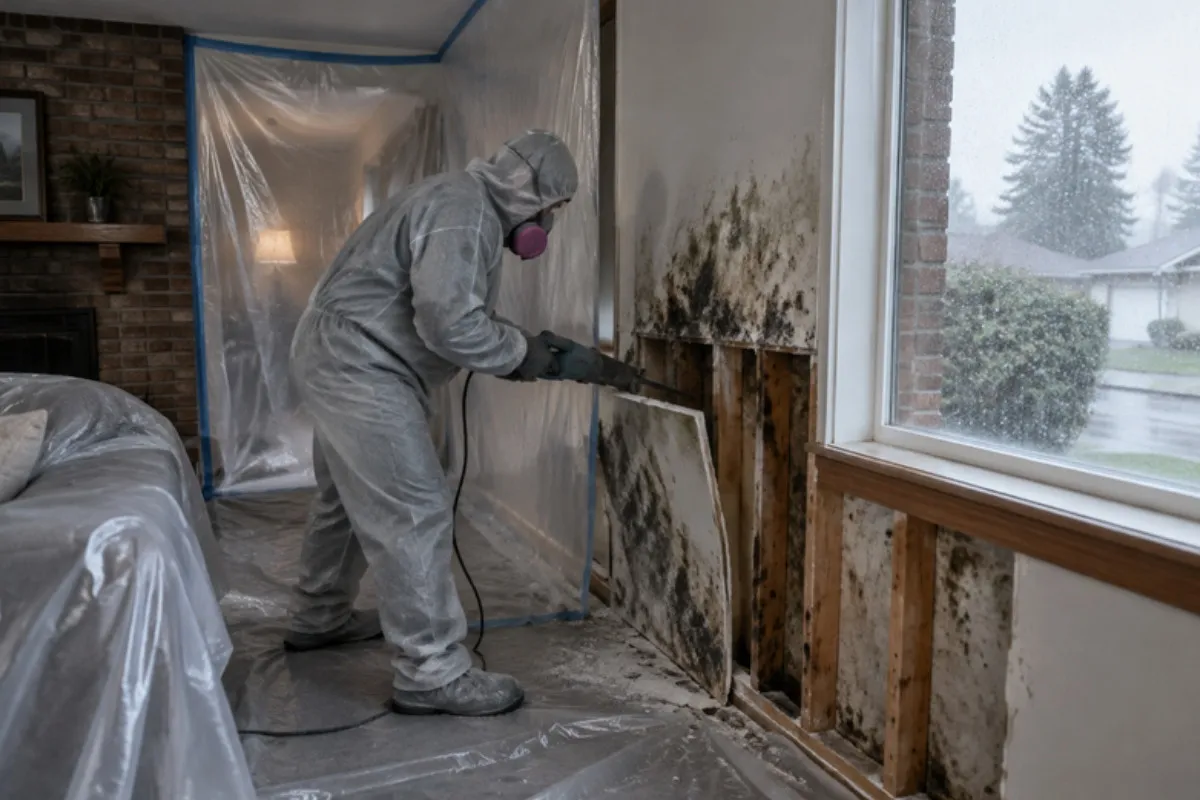
Mold remediation means stopping the moisture, physically removing mold growth and the damaged materials it is growing on, and cleaning and drying what stays, all inside a contained work area. EPA and the Washington Department of Health both treat about 10 square feet as the point where hiring a professional makes sense. Call the number on this page to be connected with a local mold remediation company in Seattle.
Start with the water, not the mold
In Seattle the moisture is often slow and steady rather than dramatic. Gray, damp weather from October through April keeps lumber and drywall from drying on their own, so a small roof drip, a bath fan venting into the attic, or groundwater seeping into a hillside daylight basement can feed growth for months. The Washington Department of Health is blunt about it: there is no way to remove every mold spore from a house, so the goal is a dry house. If the leak, seepage or condensation is not fixed, any removal work is temporary.
Size it up honestly
- Under about 10 square feet (a 3 ft by 3 ft patch) on a hard surface: EPA says most homeowners can handle it with gloves, an N-95 and a fixed moisture problem.
- Bigger than that, hidden in walls or under floors, or tied to sewage or flood water: DOH says to consider a professional.
- Growth on porous material such as drywall, insulation, carpet or ceiling tile usually has to come out. Painting or caulking over it does not solve anything.
What a well-run job looks like
- The company traces the moisture source and tells you who should repair it: a roofer, plumber, drainage contractor or the remediation company itself.
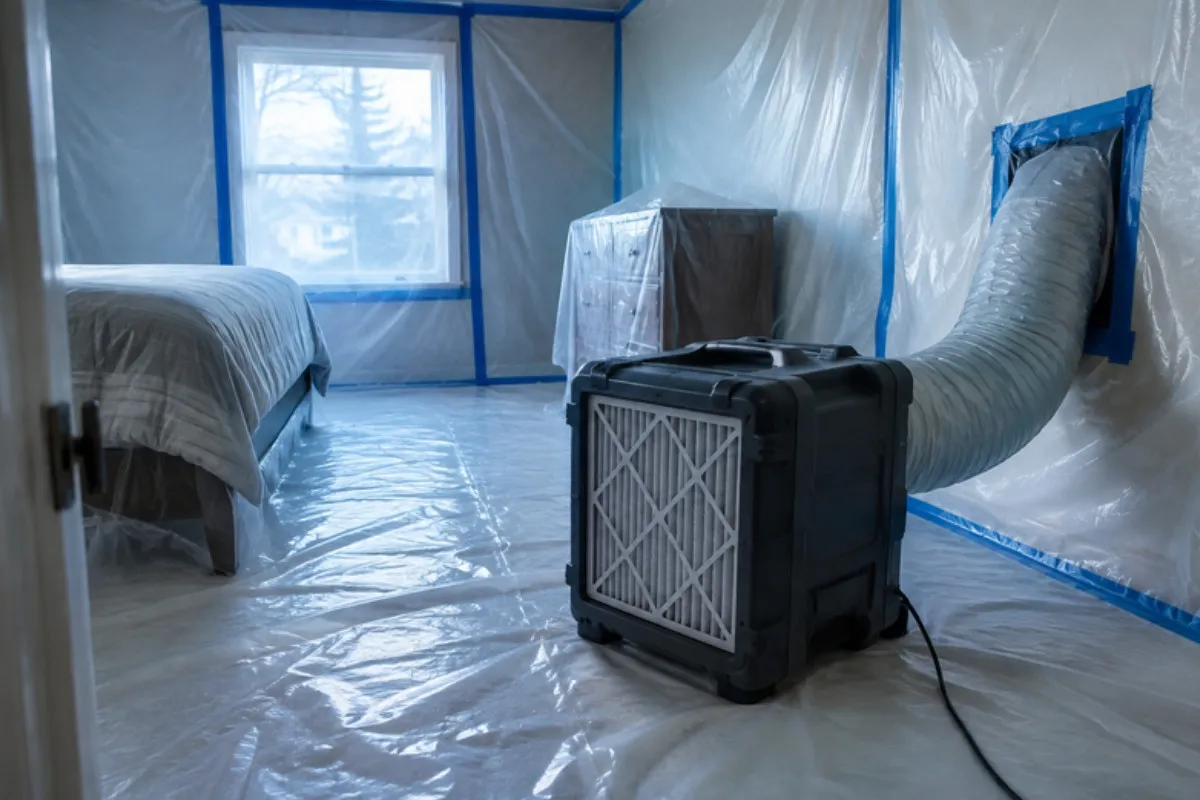
- The work area is sealed with plastic sheeting, and air filtration or negative pressure keeps dust from moving into the rest of the house. If the forced-air system may be contaminated, it stays off.
- Damaged porous materials are cut out and bagged; framing and hard surfaces are cleaned.
- Moisture readings confirm the area is dry before insulation or drywall goes back in.
- Rebuild is either included or handed to you; ask which before you sign.
What Seattle homeowners pay
Angi's Seattle cost guide reports an average of $1,988, with most jobs between $1,008 and $2,967, and per-square-foot pricing of $10 to $25. By location it lists crawl spaces at $425 to $1,650, attics at $825 to $3,300, walls at $825 to $16,550 and whole houses at $8,275 to $24,800. The biggest drivers are how much material comes out, how hard the space is to reach, whether ductwork is involved, and whether drywall and flooring replacement is part of the quote.
Checking the company
Washington has no state mold license or certification; DOH notes anyone can call themselves a mold specialist. What the state does require is that anyone doing repair work on a building be registered with Washington L&I as a construction contractor, which includes carrying the bond and liability coverage L&I requires. Check the registration on L&I's Verify a Contractor tool, which also shows bond claims and citations. Voluntary training such as IICRC courses is a plus, not a guarantee. Get written bids from more than one company, and pay by completed phase rather than everything up front.
Mold Removal & Remediation questions from Seattle homeowners
How long does mold remediation take in a Seattle house?
Do I need to leave my home during remediation?
Should the same company test and remove the mold?
Does the color of the mold change how it is removed?
Related mold services in Seattle
Mold Removal & Remediation in nearby cities and towns
King County
Snohomish County
Pierce County
Kitsap County
Island County
Mason County
Jefferson County
Sources
- EPA: Mold Cleanup in Your Home
- EPA: A Brief Guide to Mold, Moisture and Your Home
- Washington State Department of Health: Mold
- Washington State Department of Health: Hiring a Contractor (indoor air)
- Washington L&I: Register as a Contractor
- Washington L&I: Verify a Contractor
- Washington L&I: Hire Smart Step-by-Step
- Angi: Mold Remediation Cost in Seattle
- Angi: How to Hire a Mold Remediation Company
Last updated: