Crawl space mold removal means finding why the space under your house stays wet, cleaning or treating the mold on joists, subfloor and sill plates, and replacing moldy insulation and a failed ground cover. The cleaning only lasts if the moisture is handled too. Call the number on this page to be connected with a local mold remediation company in Seattle.
Why Seattle crawl spaces grow mold
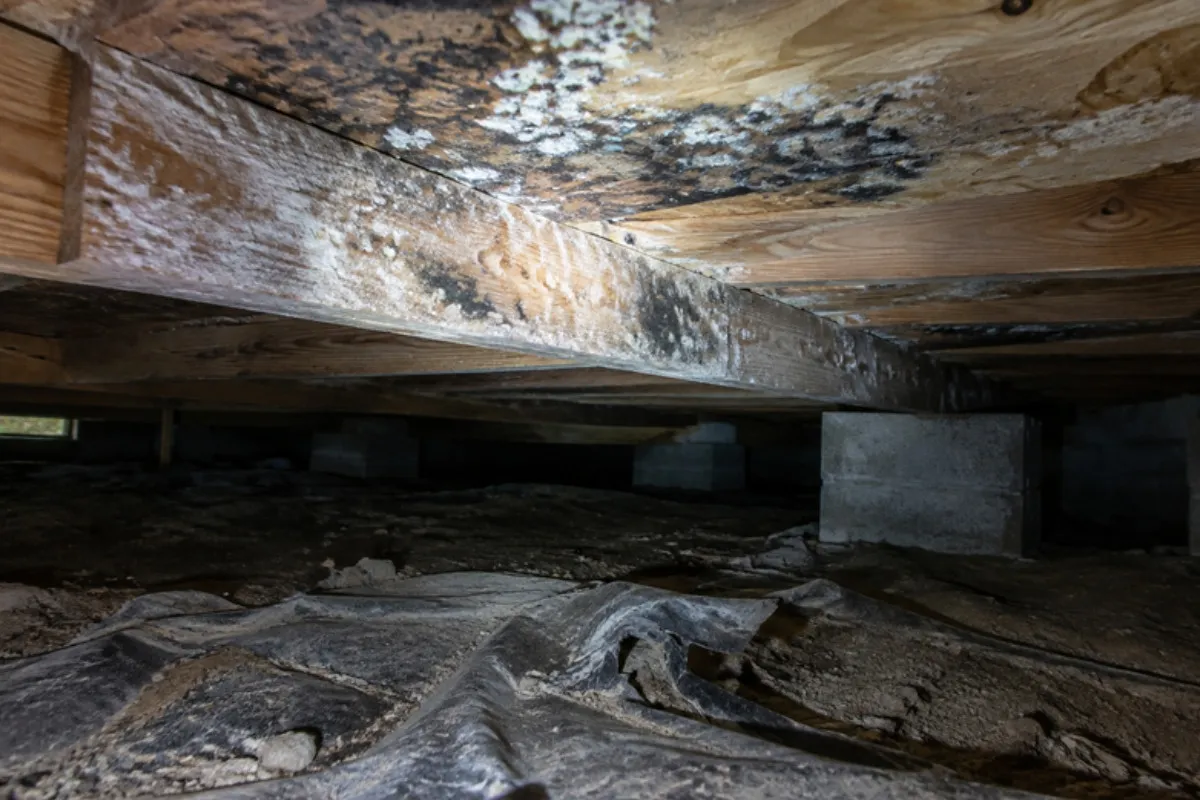
A vented crawl space breathes outdoor air. In Seattle that air is cool and wet for most of the fall, winter and spring, and the soil under the house rarely dries out. Moisture from the ground rises into the space, lands on cold wood, and sits there. Add a torn or missing plastic ground cover, a downspout that empties against the foundation, or a slow drain leak, and the joists and subfloor can stay damp for months. Homes on hillsides in West Seattle, Queen Anne or Beacon Hill can also get groundwater seeping in along the uphill wall.
Signs worth a closer look
- A musty smell in rooms right above the crawl space, worse after a long wet stretch
- Fuzzy white or dark growth on joists, beams or the underside of the subfloor
- Fiberglass batts sagging, wet or falling out between the joists
- Standing water or mud on top of the ground cover
- Ductwork running through the space with damp or loose insulation
What the inspection should cover
Expect the inspector or remediation company to crawl the whole space, not look in from the hatch. They should take moisture readings in the framing, check the ground cover, vents, foundation drainage and any plumbing, and photograph what they find. If heating ducts run through the space, EPA advises not running an HVAC system you suspect is contaminated with mold, so ask them to look at the ducts too. Sampling is usually unnecessary when mold is visible; EPA says there are no federal limits to compare results against.
What remediation usually includes
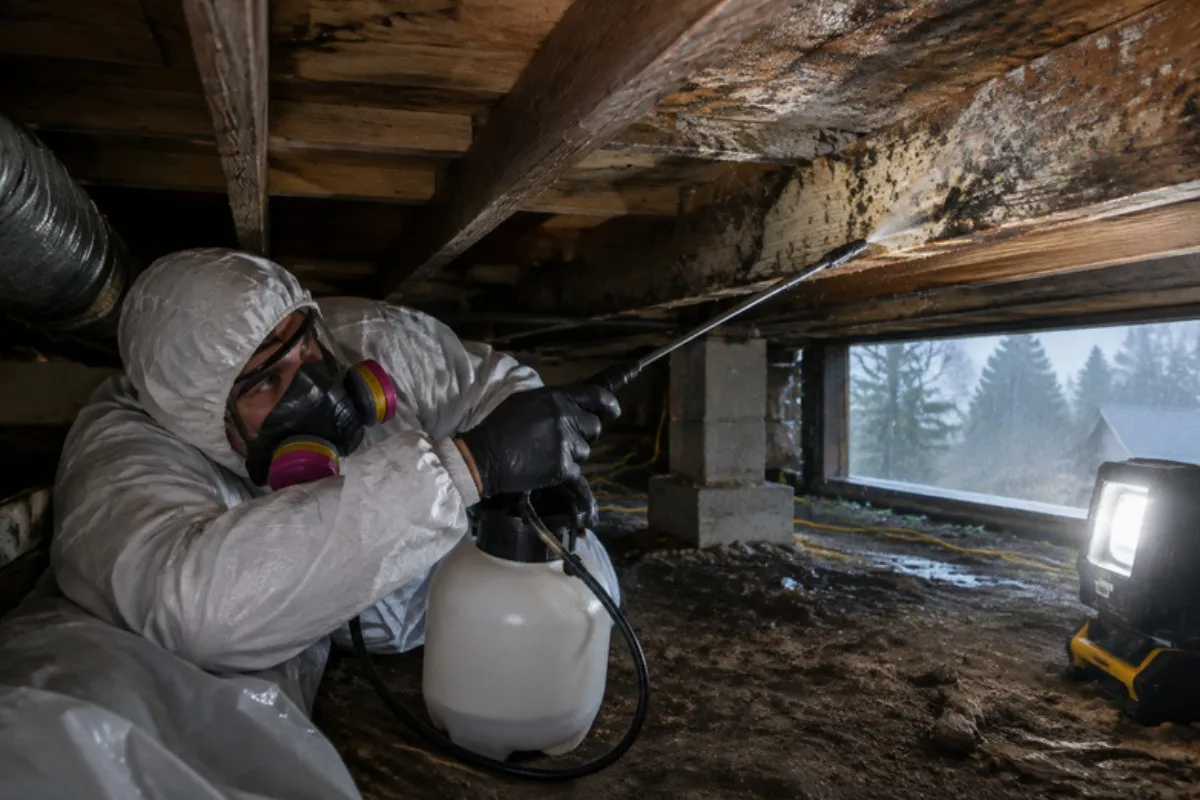
- Fix or plan for the water source first: drainage, gutters, plumbing leaks.
- Pull wet or moldy insulation and debris and bag it out.
- Clean surface mold from framing, often by scrubbing, sanding or blasting, then let the wood dry.
- Lay a new, sealed ground cover and restore insulation once readings show the wood is dry.
EPA says not to paint or caulk over mold. A sealant or coating sprayed over wet wood without fixing the moisture is a warning sign in a bid.
What it costs
| Source | Crawl space range |
|---|---|
| Angi's Seattle cost guide | $425 to $1,650 |
| HomeGuide, 2026 national range | $1,500 to $4,000 |
Price depends on the square footage, how low and tight the space is, how much insulation comes out, and whether drainage or ground cover work is in the bid. Washington has no state mold license or certification, so check that the company is registered with Washington L&I as a construction contractor on L&I's Verify a Contractor tool, and get the scope in writing.
Crawl Space Mold Removal questions from Seattle homeowners
Is crawl space mold common in Seattle?
Can I just spray the joists myself?
Will crawl space mold affect the air in my house?
I rent. Who handles crawl space mold?
Related mold services in Seattle
Crawl Space Mold Removal in nearby cities and towns
King County
Snohomish County
Pierce County
Kitsap County
Island County
Mason County
Jefferson County
Sources
- EPA: Mold Cleanup in Your Home
- EPA: A Brief Guide to Mold, Moisture and Your Home
- EPA: Mold Information Slideshow (testing and sampling)
- Washington State Department of Health: Hiring a Contractor (indoor air)
- Washington L&I: Verify a Contractor
- Angi: Mold Remediation Cost in Seattle
- HomeGuide: Mold Removal Cost (2026)
- RCW 59.18.060: Landlord duties
- RCW 59.18.070: Landlord failure to carry out duties
Last updated: