Post-remediation clearance testing confirms that the work area is clean, dry and free of visible growth before containment comes down and finishes go back on. It usually combines a visual inspection, moisture readings and, where useful, air or surface samples taken by someone independent of the remediation company. Call the number on this page to be connected with a local mold inspector or remediation company in Seattle.
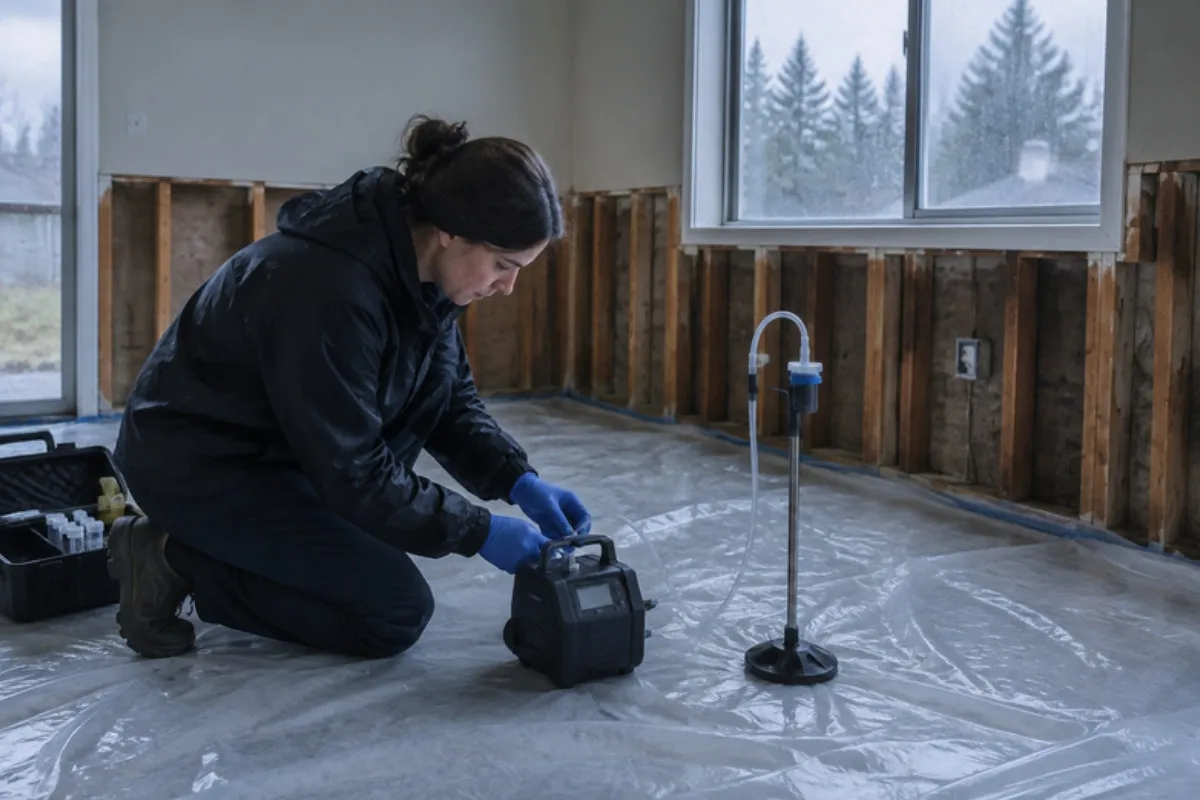
Agree on the finish line before work begins
The most common clearance problem is not a failed sample. It is a contract that never said what passing means. Before you sign with a remediation company, put these points in writing:
- Who performs clearance, and that it is a different company from the one doing removal.
- What will be checked: visible growth, dust, moisture content of framing and subfloor, and whether samples will be taken.
- That containment stays up until clearance is passed.
- Who pays for re-cleaning and a second round of testing if the area fails.
Washington L&I's Hire Smart guidance supports this: get the specific work in writing, get changes in writing, and hold back part of the payment until each phase is complete. Clearance is a natural point to tie the final payment to.
What the clearance visit usually covers
- Visual check. No remaining growth on framing, sheathing or joists, and no settled dust or debris inside containment.
- Moisture readings. Wood and remaining materials should be dry. If they are still wet, the mold has a reason to come back.
- Samples, when useful. EPA notes surface sampling can help show whether an area has been adequately cleaned. Air samples inside containment are compared with outdoor air or unaffected rooms.
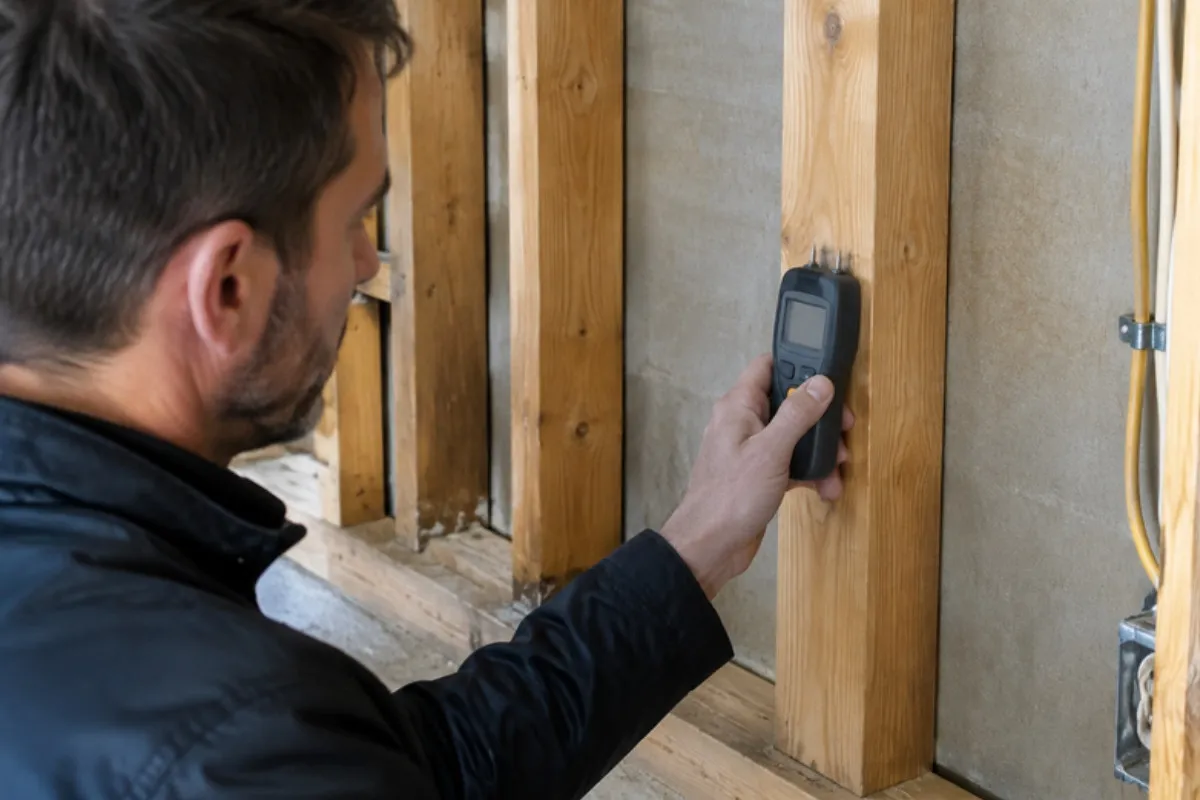
Why drying gets extra attention here
From October to April, Seattle air stays damp and cool, so lumber and crawl spaces dry slowly. A job that looks finished in November can still have high moisture readings in the sill plate or subfloor. A careful assessor will hold clearance until readings come down rather than sign off on a clean but wet cavity. Homes that took on water, such as those in South Park during the December 2022 king tide flooding on the Duwamish, may need several rounds of drying before clearance makes sense.
If the area fails
A fail is not unusual and does not mean the job was a scam. It typically means more HEPA vacuuming and wiping, more drying time, or removal of a piece of material that was missed. The remediation company re-cleans and the assessor retests. If the same area fails twice, ask whether the moisture source was really fixed.
Cost and paperwork
Clearance pricing usually follows inspection and sampling rates. National ranges for 2026 put air samples at $100-$300 and surface samples at $50-$200 each (HomeGuide), with a full inspection typically $303-$1,044 (Angi). Puget Sound prices vary with the number of rooms and access. Keep the clearance report with the remediation invoice; buyers, landlords and insurers may ask for both.
Post-Remediation Clearance Testing questions from Seattle homeowners
Can the company that removed the mold also do the clearance test?
When should clearance happen?
What happens if clearance fails?
Do I need lab samples for clearance, or is a visual check enough?
Related mold services in Seattle
Helpful guides
Post-Remediation Clearance Testing in nearby cities and towns
King County
Snohomish County
Pierce County
Kitsap County
Island County
Mason County
Jefferson County
Sources
- EPA: Mold Information Slideshow (testing and sampling)
- EPA: Mold Cleanup in Your Home
- Washington L&I: Hire Smart Step-by-Step
- Angi: How to Hire a Mold Remediation Company
- Angi: How Much Does a Mold Inspection Cost? (2026 data)
- HomeGuide: Mold Inspection Cost (2026)
- Seattle Public Utilities: statement on South Park flooding (Dec. 2022)
Last updated: