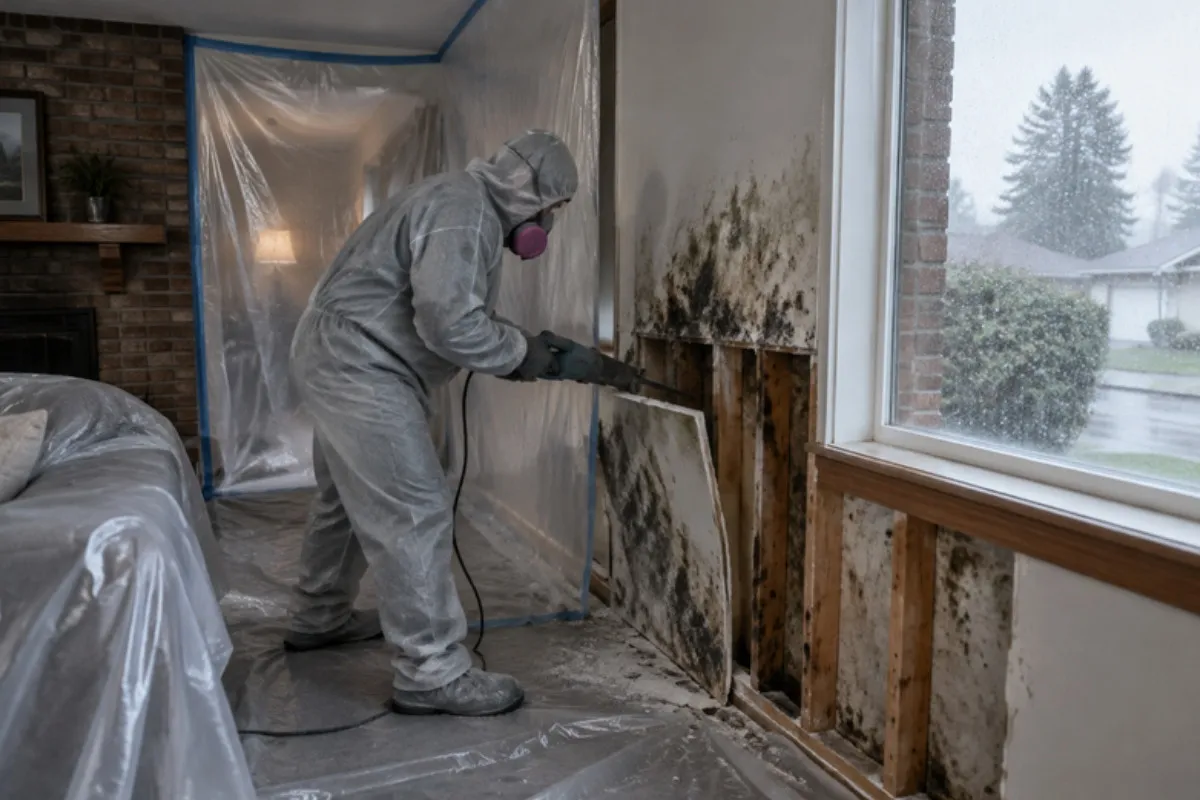
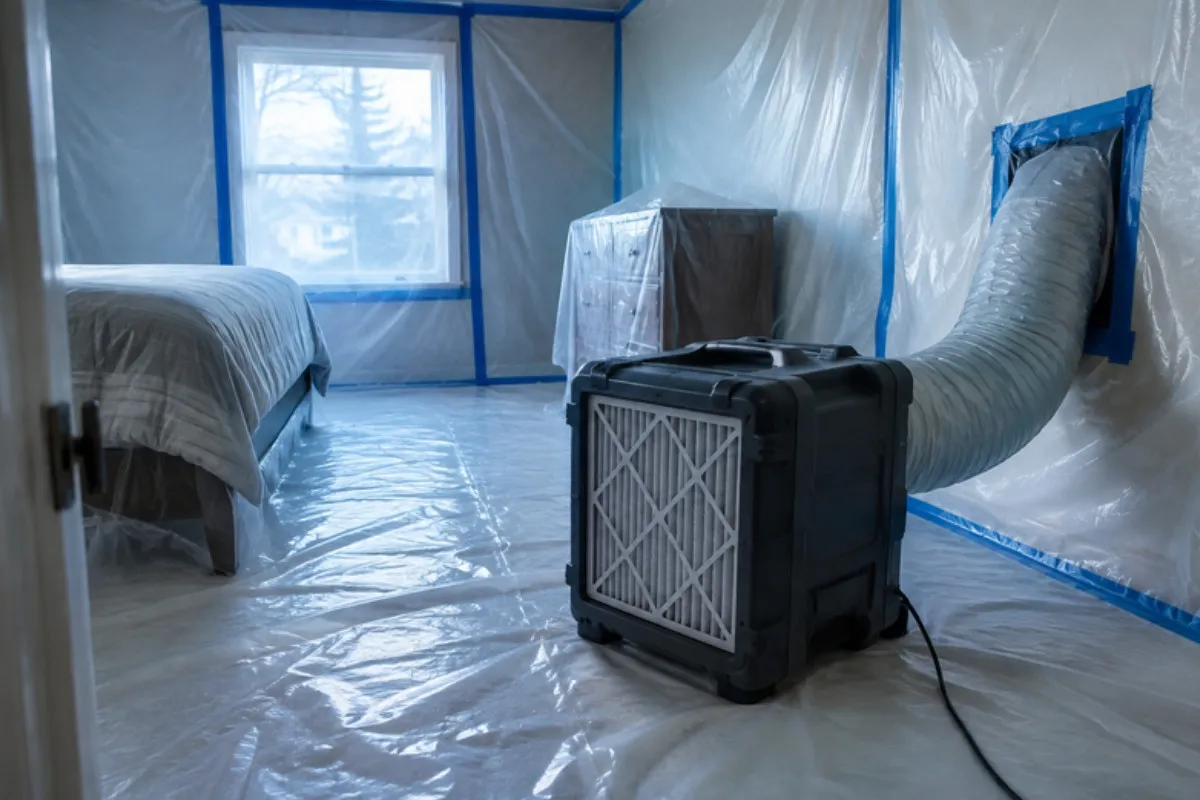
Lake Stevens homeowners near the lake or Catherine Creek face mapped flood hazard, and every house in town lives through the same damp months that feed mold in crawl spaces, attics and bathrooms. Remediation fixes the water source, then removes growth inside a sealed area. Call the number on this page to be connected with a local mold remediation company in Lake Stevens.
We live on the lake. Are we more likely to have mold?
Lake Stevens is the largest and deepest lake in Snohomish County, and it drains through Catherine Creek to the Pilchuck River. The city's environment element says land prone to 100-year floods is limited mostly to properties fronting Catherine Creek and the lake, mapped by FEMA as Zone A, and that flooding has also come from wetlands, streams and ditches overflowing. Being near water does not guarantee mold, but it raises groundwater and humidity around foundations, which shows up as damp crawl spaces, efflorescence on concrete and a musty lower level. If water actually entered the house, EPA says to assume mold where materials stayed wet past 24 to 48 hours.
Do I need a permit to rebuild after the mold is gone?
Removal itself is not described as permitted work, but putting the house back together can be. Replacing structural framing, rebuilding walls or making changes in a flood hazard area brings in the city. Flood hazard areas in Lake Stevens are regulated under LSMC Chapter 14.64 and the Critical Areas Ordinance, Chapter 14.88. The City of Lake Stevens Building Division, part of Planning & Community Development, handles plan review and inspections, with permits through the Online Permit Center. Ask the remediation company where its scope ends and whether the rebuild is included.
Why does the mold keep coming back?
Because the moisture is still there. Many Lake Stevens houses are commuter-era subdivisions with finished lower floors, and the usual culprits are bath fans that vent into the attic, gutters dumping water next to the foundation, a torn crawl space vapor barrier, or condensation on cold walls behind furniture. Bleach on the surface does not reach growth rooted in drywall paper or insulation, and paint over mold does not stop it. A good company will find the source with a moisture meter and tell you who should fix it before quoting removal.
A local note
Lake Stevens Code Enforcement covers nuisance, land use and stormwater issues, and housing conditions are not on its list. The Snohomish County Health Department says it does not investigate mold in private homes and points landlord mold disputes to the Dispute Resolution Center of Snohomish and Island Counties. For renters, written notice to the landlord under Washington's landlord-tenant law is the first step.
Mold Removal & Remediation questions in Lake Stevens
Do I need a permit for mold remediation?
Why does mold come back after it has been cleaned?
Do I need to leave home while mold is being removed?
Do I need mold testing before remediation starts?
More mold services in Lake Stevens
Mold Removal & Remediation nearby
Helpful guides
Sources
- Wikipedia: Lake Stevens, Washington
- City of Lake Stevens: Natural Resources and Environment Element (2024)
- City of Lake Stevens: Planning & Community Development
- City of Lake Stevens: Code Enforcement
- Snohomish County Health Department: Mold and Air Quality
- EPA: Homeowner's and Renter's Guide to Mold Cleanup After Disasters (pdf)
- EPA: Mold Cleanup in Your Home
- RCW 59.18.070: Landlord failure to carry out duties
Last updated: