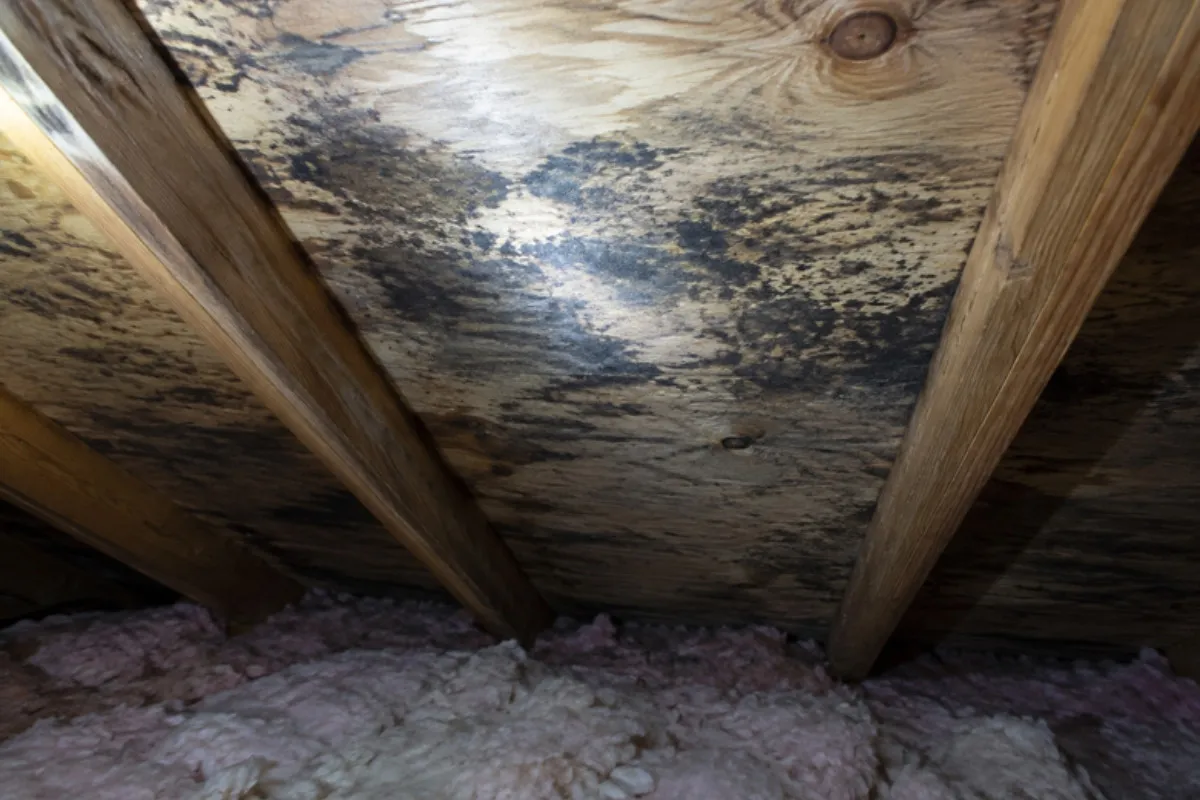
In Lake Stevens, attic mold usually grows when warm, moist household air reaches cold roof sheathing and condenses through the rainy season, or when a roof or flashing leak keeps one area wet. The work includes correcting the moisture source, cleaning or replacing affected wood and replacing wet insulation. Call the number on this page to be connected with a local mold remediation company in Lake Stevens.
Does living near the lake make attic mold more likely?
Not directly. Lake Stevens is a commuter city about 30 miles north of Seattle and roughly 6 miles east of Everett, built around the largest and deepest lake in Snohomish County. The city's flood-prone areas are mostly properties fronting the lake and Catherine Creek, plus spots where wetlands, streams and ditches overflow. That water affects yards, crawl spaces and lower floors. What wets an attic is moisture from inside the house rising into a cold space. A lakefront home and one up on Cavalero Hill can have the same attic problem if their bath fans, ceiling gaps and eave vents are in similar shape.
How do I tell condensation from a roof leak?
- Condensation: staining spread fairly evenly across many rafter bays, often heaviest on the shaded slope, with frost or rust on nail tips in cold weather.
- Leak: a defined stain or rot spot centered on a chimney, plumbing vent, skylight or roof valley, sometimes with water marks on the insulation below.
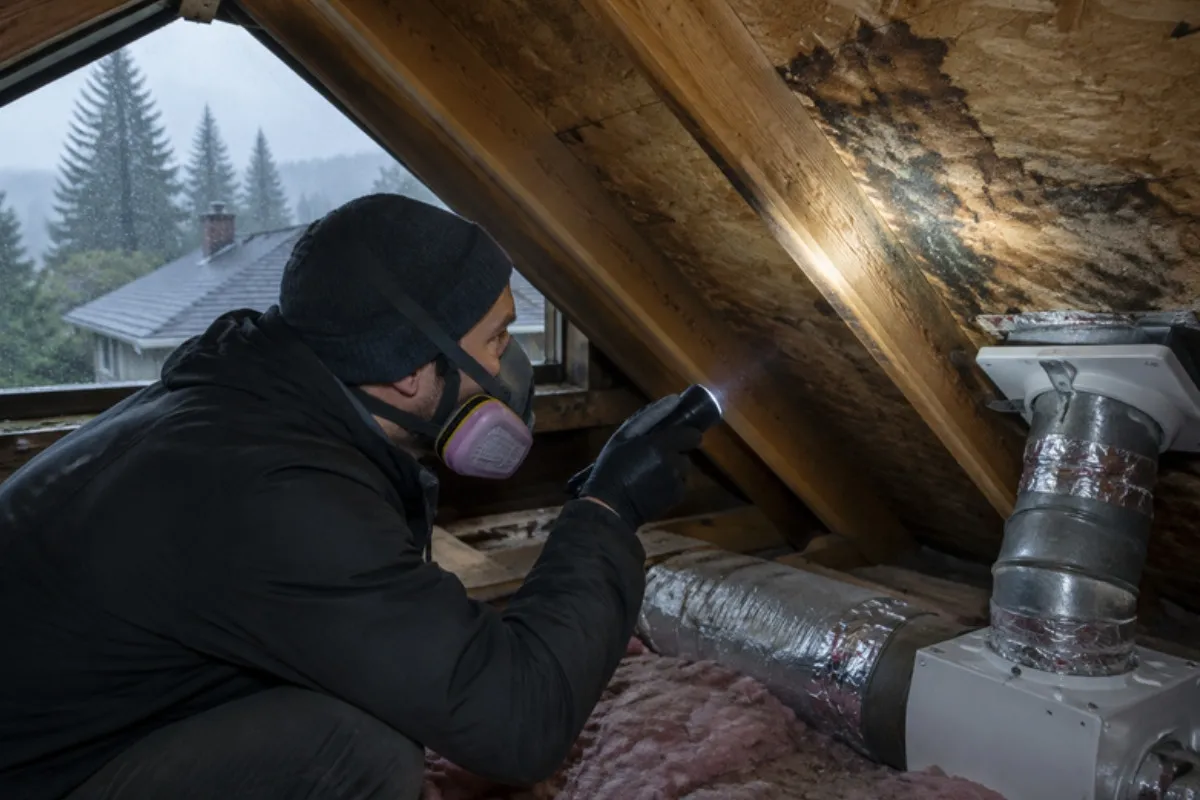
- Fan problem: damp, discolored wood or insulation directly around where a bath or kitchen duct ends.
Many attics have more than one cause. A remediation company should take moisture readings and explain which one it found before quoting cleanup. If both are present, the leak gets repaired and the airflow gets corrected; fixing only one leaves the other to keep wetting the wood.
Who handles permits if wood has to be replaced?
Mold cleaning by itself isn't usually permitted work, but replacing roof sheathing or rafters or reroofing can be. The City of Lake Stevens Planning & Community Development Building Division on Main Street handles plan review and inspections, with applications through the city's Online Permit Center.
One local note
Angi's Seattle cost guide lists attic mold removal at $825 to $3,300, and HomeGuide's 2026 national ranges are $1,500 to $6,000 for a partial attic and $6,000 to $15,000 for a full one. The Snohomish County Health Department doesn't investigate mold in private homes, so the hiring decision rests with you: check that the company is registered with Washington L&I as a construction contractor on L&I's Verify a Contractor tool, and get the scope in writing.
Attic Mold Removal questions in Lake Stevens
Why does an attic get moldy when the roof doesn't leak?
Do I need a mold test before attic work starts?
Do I need a permit for repairs after attic mold removal?
How do I check an attic mold company in Washington?
More mold services in Lake Stevens
Attic Mold Removal nearby
Helpful guides
Sources
- Wikipedia: Lake Stevens, Washington
- City of Lake Stevens: 2024 Natural Resources and Environment Element (pdf)
- City of Lake Stevens: Planning & Community Development
- Snohomish County Health Department: Mold & Air Quality
- Angi: How Much Does Mold Remediation Cost in Seattle, WA?
- HomeGuide: How Much Does Mold Removal and Remediation Cost? (2026)
- L&I: Verify a Contractor, Tradesperson or Business
- EPA: Mold Information Slideshow (testing and sampling)
Last updated: