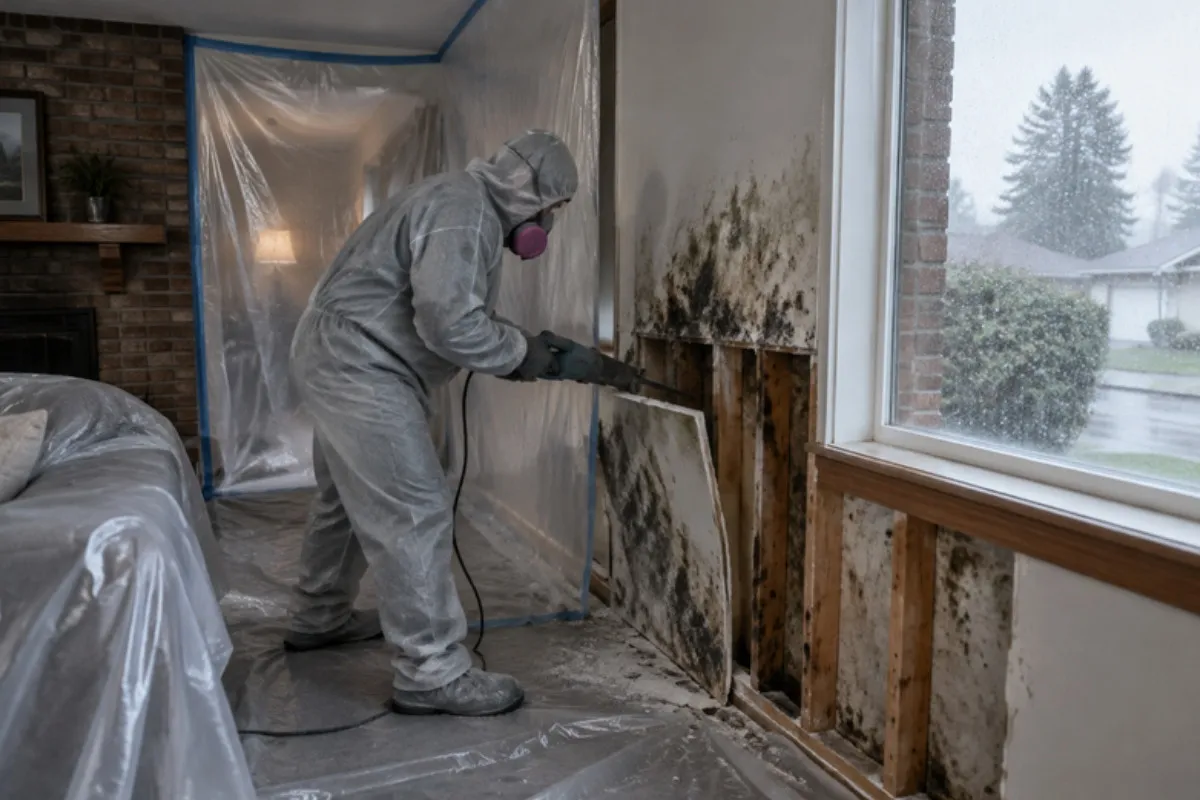
In SeaTac, most mold traces back to the long wet season: condensation, slow leaks and damp crawl spaces. Remediation means fixing that moisture and removing growth inside a contained area, with anything over about 10 square feet best left to a professional. Call the number on this page to be connected with a local mold remediation company in SeaTac.
What happens when you call
The call connects you with an independent mold remediation company that serves SeaTac and the rest of south King County. You explain what you are seeing: where it is, roughly how big, what got wet and when. If the company takes the job, it arranges a visit to look at the area, take moisture readings and trace the water source. You should come away with a written scope that says what will be removed, how the area will be sealed off and who fixes the leak. Whether you hire anyone is up to you.
Before any work starts, look the company up on L&I's Verify a Contractor tool. Washington has no state mold license, but anyone repairing buildings must be registered with L&I as a construction contractor.
What drives the cost
- Size. Angi's Seattle cost guide lists $10 to $25 per square foot, about $1,000 to $2,500 for 100 square feet.
- Where it is. The same guide shows crawl spaces at $425 to $1,650, basements at $425 to $2,475 and walls anywhere from $825 to $16,550, since opening a wall can mean a few feet or a whole room.
- Ducts. Growth in the heating system is its own line item; Angi lists HVAC work at $2,475 to $8,275.
- Rebuild. New drywall ($825 to $2,400 in Angi's guide), carpet or flooring may or may not be part of the quote.
Conditions in SeaTac homes
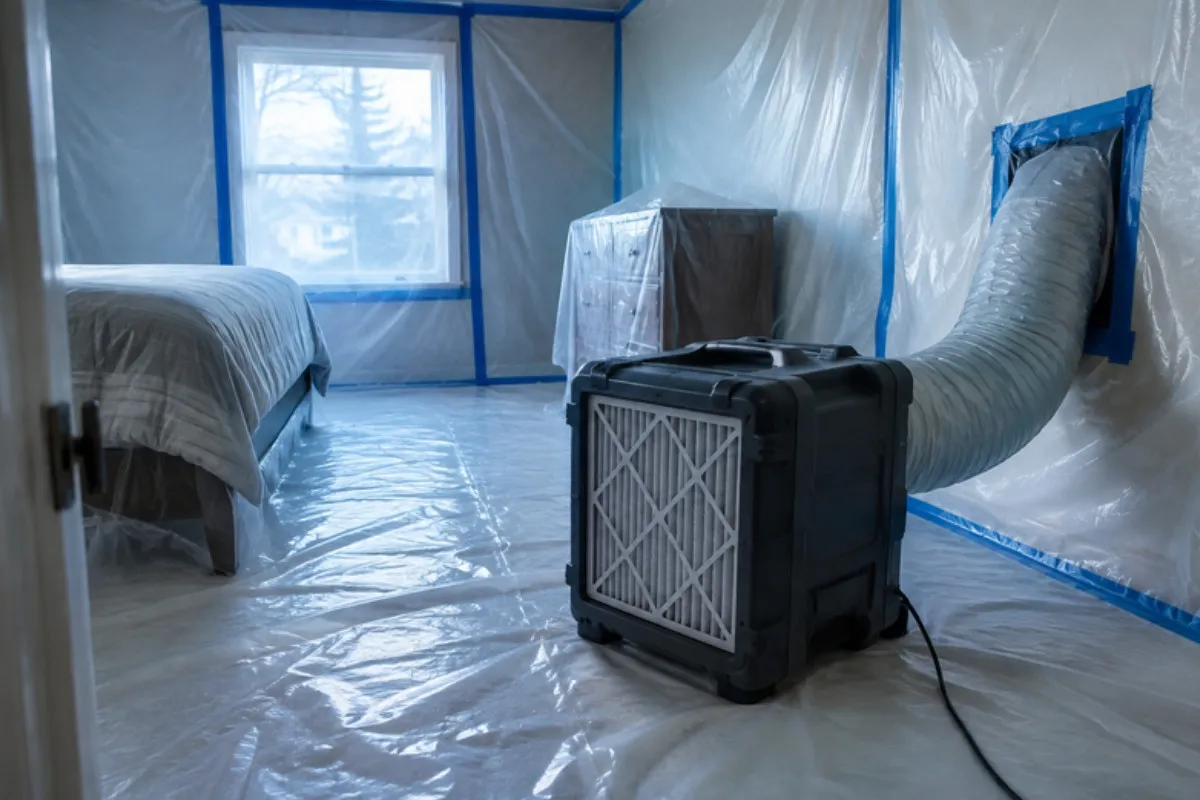
SeaTac wraps around Seattle-Tacoma International Airport on a plateau between Puget Sound and the Duwamish and Green River valleys, about 12 miles south of downtown Seattle. Angle Lake and Bow Lake sit inside the city, and Miller Creek and Des Moines Creek drain the plateau. For most houses and apartments, though, the bigger mold driver is the weather: windows that stream on cold mornings, closets on exterior walls that never warm up, and crawl spaces that hold damp air for months. Repairs that go past cleanup, such as replacing framing or rebuilding a wall, go through the City of SeaTac Building Services Division for permits.
Renters have their own route. The city tells tenants with mold or indoor air questions to contact the landlord first and points them to King County indoor air specialists. If a leak or moisture problem stays unfixed after the landlord-tenant process, SeaTac Code Compliance investigates rental housing violations.
Before the company arrives
- Stop any leak you can reach and note when the water started.
- Photograph the growth and any water stains.
- Clear a path to the area, including crawl space hatches and attic access.
- Pull out your insurance policy and any past repair records for that part of the house.
- Write down your questions about containment, drying checks and rebuild.
Mold Removal & Remediation questions in SeaTac
What can a renter do about mold the landlord won't fix?
Can the same company test for mold and remove it?
How long does mold remediation take?
Do I need mold testing before remediation starts?
More mold services in SeaTac
Mold Removal & Remediation nearby
Sources
- Wikipedia: SeaTac, Washington
- City of SeaTac: Building Services Division
- City of SeaTac: Tenant resources
- Public Health - Seattle & King County: Mold
- Angi: Mold Remediation Cost in Seattle
- Washington L&I: Register as a Contractor
- Washington L&I: Verify a Contractor
- RCW 59.18.070: Landlord failure to carry out duties
- Angi: How to Hire a Mold Remediation Company
Last updated: