Lakewood attics usually grow mold when moist indoor air or a slow roof leak keeps the sheathing wet through the cool months. Removal means finding which one it is, fixing it, then cleaning or replacing the wood and the insulation that held the moisture. Call the number on this page to be connected with a local mold remediation company in Lakewood.
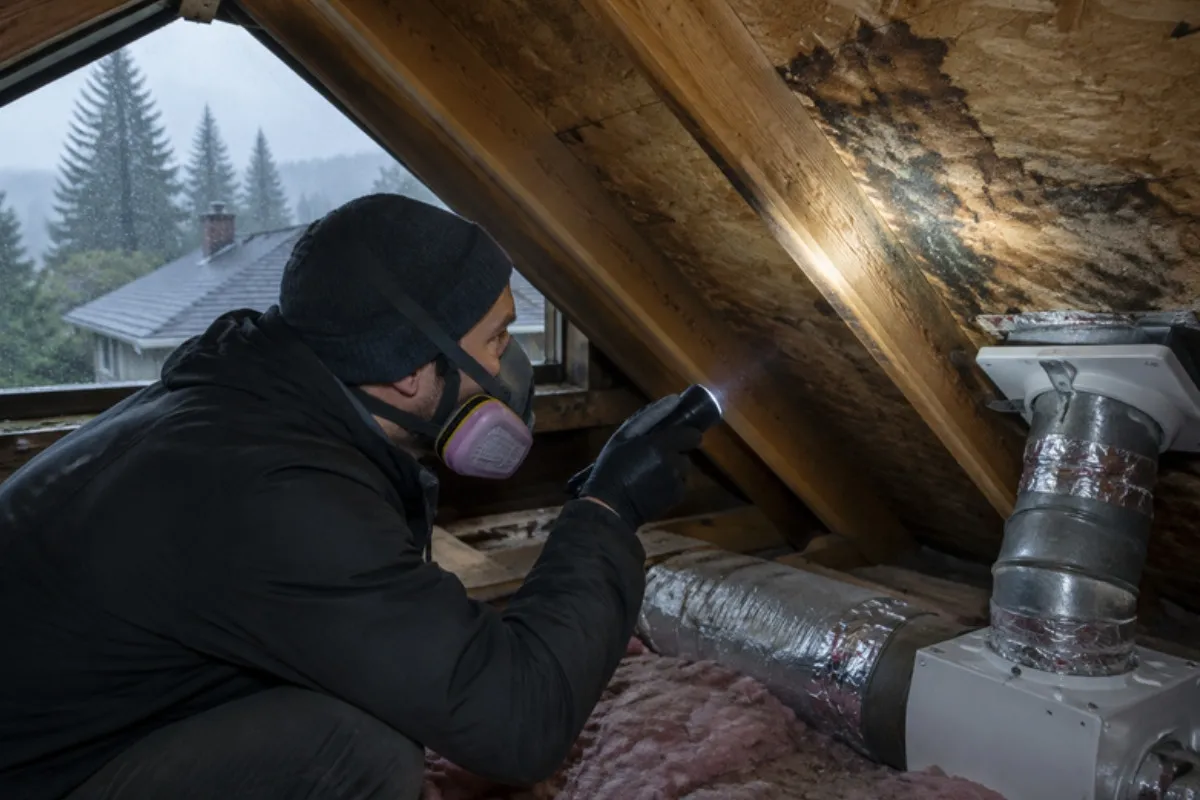
What keeps Lakewood attics damp
Lakewood is Pierce County's second-largest city, a suburban community about 33 miles south of Seattle beside the McChord Field side of Joint Base Lewis-McChord. American Lake, Lake Steilacoom, Gravelly Lake, Lake Louise and Waughop Lake all sit inside city limits, and Chambers Creek and Clover Creek run through it. None of that pours water into an attic directly, but it describes a place where outdoor air is rarely dry from fall to spring. Venting an attic with damp, cool air does little to dry wood that is already wet.
The water that actually reaches the sheathing usually comes from inside: showers, cooking, laundry and breathing in a closed-up house. It rises through gaps around ceiling lights, the attic hatch and plumbing stacks, or it is blown up by a bath fan whose duct ends in the insulation. The Tacoma-Pierce County Health Department's own mold advice starts in the same place: stop the leak, repair the roof and plumbing, and control the water before anything else.
Condensation or a leak?
| What you notice | Points to condensation | Points to a roof leak |
|---|---|---|
| Pattern | Even gray or black speckling over a broad area | A defined stain or streak in one spot |
| Location | Colder, shadier slope; near the eaves | Under a chimney, skylight, vent pipe or valley |
| When it gets worse | Cold snaps and long closed-up stretches | Right after heavy, windy rain |
| Other clues | Frost or rust on nail tips, damp insulation surface | Water lines on rafters, a ceiling stain below |
| Usual fix | Duct fans outside, air seal, clear soffits | Flashing or roofing repair |
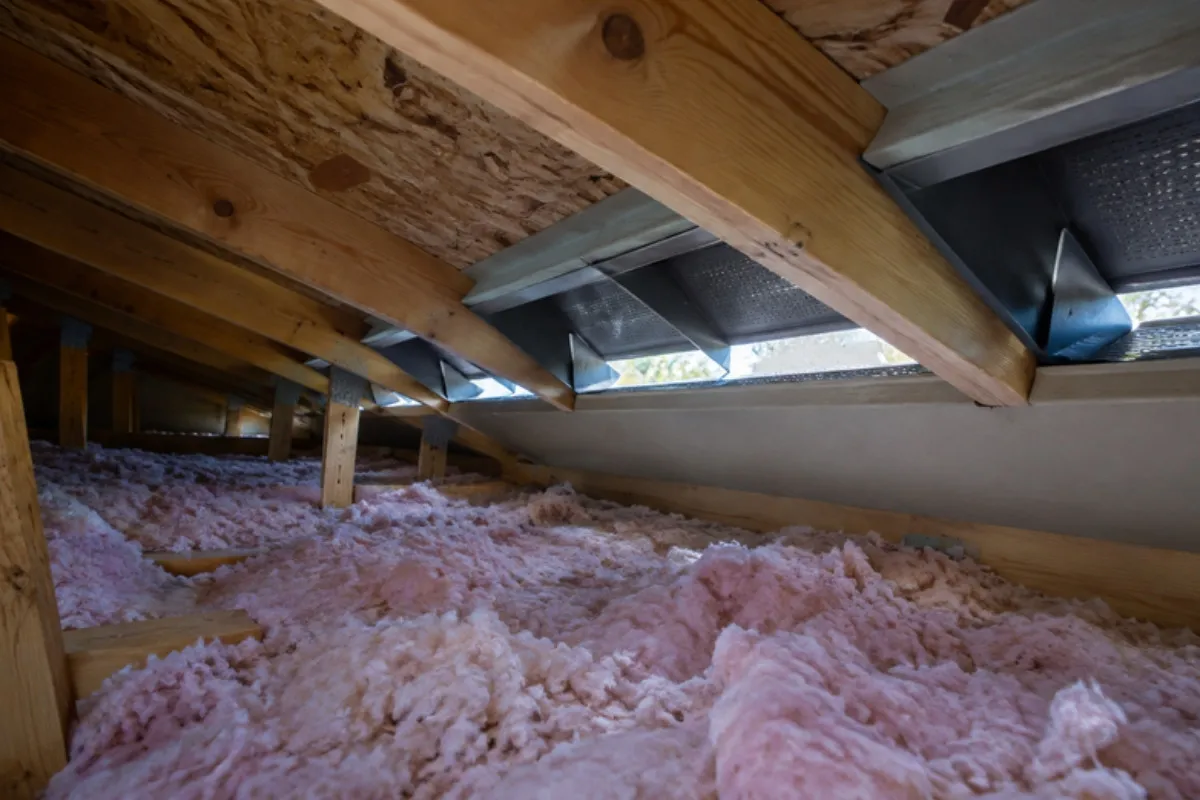
Signs to check for
- Dark speckling on the roof deck when you shine a flashlight across it
- Insulation that feels damp on top or has gray patches
- Rusted nail tips, or drip marks beneath them
- A bath fan duct lying loose on the attic floor
- Musty air in upstairs closets after a run of wet weeks
Timing and the wet season
Attic condensation builds from roughly October through April, when the roof deck stays cold and the house is shut. That is when stains spread and a smell appears. Late spring and summer give the best working conditions, because the wood dries faster and insulation can go back in sooner. Even so, there is no reason to wait out a winter: correcting a fan duct or sealing ceiling gaps in November stops months of new growth. If rotten sheathing or rafters have to be replaced, ask the City of Lakewood Planning and Public Works Permit Center about permits first.
Attic Mold Removal questions in Lakewood
Is the dark staining on my roof sheathing mold?
Where should my bathroom fan vent?
I rent. Who deals with mold in the attic?
What does attic mold removal cost?
More mold services in Lakewood
Attic Mold Removal nearby
Sources
- Wikipedia: Lakewood, Washington
- City of Lakewood: Clover Creek Floodplain
- City of Lakewood: Planning and Public Works
- Tacoma-Pierce County Health Department: Mold FAQs
- KIRO 7: Pierce County sees uptick in housing complaints such as mold
- Angi: How Much Does Mold Remediation Cost in Seattle, WA?
- HomeGuide: How Much Does Mold Removal and Remediation Cost? (2026)
- RCW 59.18.060: Landlord, Duties
- RCW 59.18.070: Landlord's failure to remedy, Tenant's remedies, Notice
Last updated: