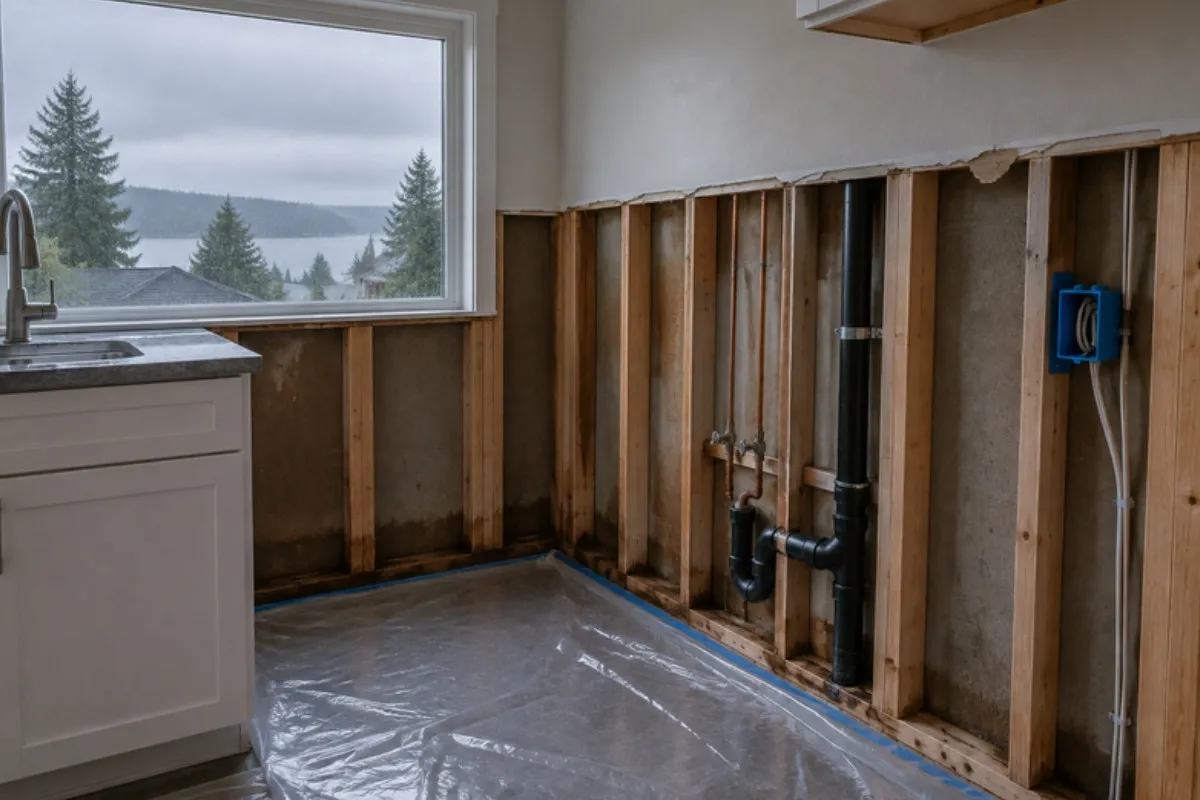
In Sumner, wall mold typically starts after water gets into the cavity, whether from a leaking pipe, rain finding gaps in siding and trim, condensation on cold walls, or floodwater during storms like the December 2025 atmospheric river. Damaged drywall and insulation are usually removed, the framing cleaned and dried, and the source fixed before the wall is rebuilt. Call the number on this page to be connected with a local mold remediation company in Sumner.
Local conditions in Sumner
Sumner sits in the valley in Pierce County, and the city uses the FEMA Flood Insurance Rate Map as its flood hazard criterion when it reviews building permits. During the December 2025 atmospheric river flooding, the city said that to its knowledge no one in Sumner was displaced, though nearby areas kept seeing impacts and Pierce County asked residents and businesses, including those in Sumner, to submit damage reports. If water touched your walls in that storm or any other, the cavity may still be holding moisture behind dry-looking paint. The city's own building design criteria rate decay risk as slight to moderate, a reminder that wood framing kept damp for long periods can deteriorate.
Do it yourself or call a pro?
| Homeowner cleanup | Professional remediation | |
|---|---|---|
| Size | Under about 10 square feet, per EPA | Larger areas |
| Location | Surface spots on painted drywall | Growth inside the cavity or insulation |
| Water source | Condensation you can control | Floodwater, hidden leaks, rain intrusion |
| Materials | Firm, dry drywall | Soft or stained drywall that has to come out |
Signs to look for
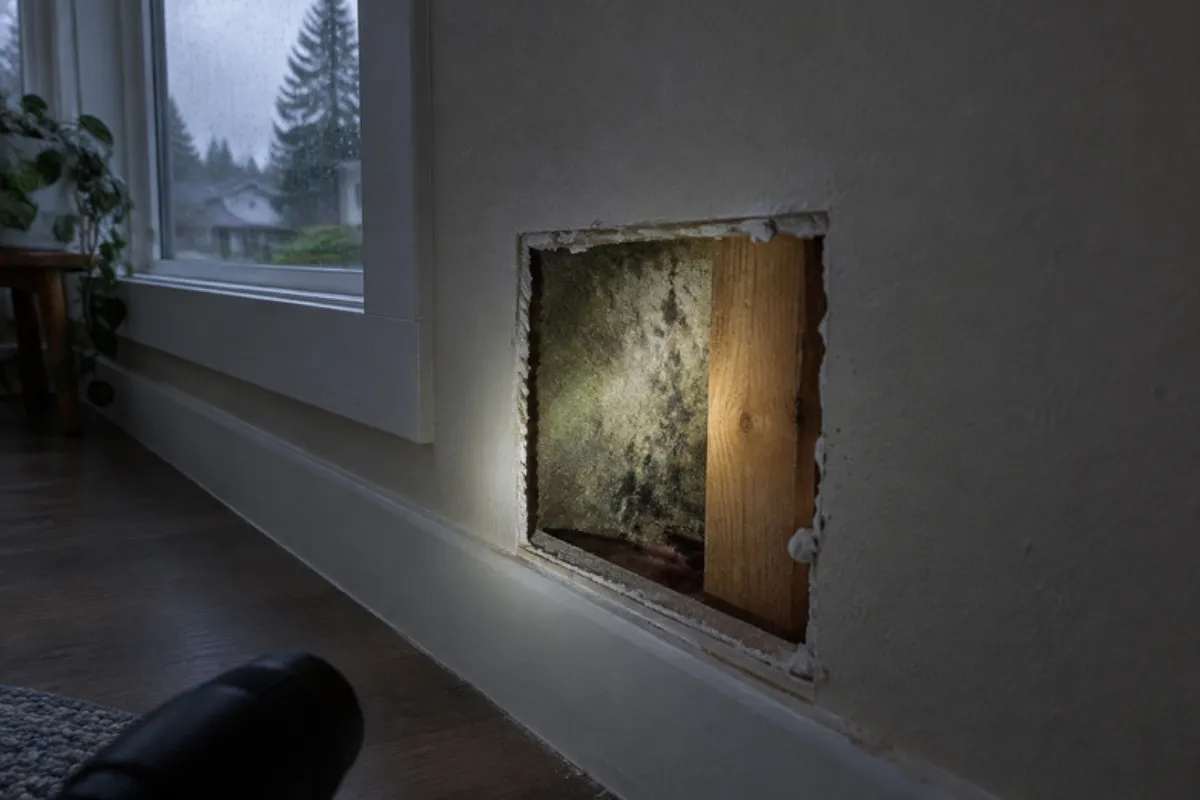
- A tide line or brown edge on drywall a few inches to a foot above the floor.
- Musty air when you open a closet on an outside wall.
- Paint lifting near windows or exterior doors.
- Baseboard that has swollen or stained.
- Outlets or switch plates on an outside wall that feel damp or show rust.
None of these prove mold on their own, but each points to moisture that deserves a meter reading. A company can usually confirm what is behind the surface with a small inspection hole before deciding how much drywall to remove.
Timing and seasonal notes
EPA says to dry water-damaged materials within 24 to 48 hours; after that, assume mold may be growing in a flooded wall. Insulation soaked by floodwater rarely dries in place and is usually pulled out so the studs can dry. Winter is when condensation and rain intrusion peak, so problems found in spring often started months earlier. Rebuilding permits go through the City of Sumner Permit Center, and the city's code complaint process routes reports to the right department. Anyone doing the repair work should be registered with Washington L&I as a construction contractor.
Mold in Walls & Drywall questions in Sumner
What should I do if storm or tide water got into my walls?
Can the studs and sheathing be saved?
How much does it cost to remove mold from walls?
Does rebuilding the wall need a permit?
More mold services in Sumner
Mold in Walls & Drywall nearby
Helpful guides
Sources
- Wikipedia: Sumner, Washington
- City of Sumner: Climatic and Geographic Design Criteria
- City of Sumner: December 2025 flooding update
- City of Sumner: Permits
- City of Sumner: Code Violations
- EPA: Mold Cleanup in Your Home
- EPA: Homeowner's and Renter's Guide to Mold Cleanup After Disasters (pdf)
- Angi: How Much Does Mold Remediation Cost in Seattle, WA?
- HomeGuide: How Much Does Mold Removal and Remediation Cost? (2026)
Last updated: