Black mold in a Sammamish home comes out the same way any mold does: stop the water, remove or clean the growth inside a sealed work area, and dry everything before it's closed up. The dark color says little about risk; the size of the patch and what it's growing on decide the approach. Call the number on this page to be connected with a local mold remediation company in Sammamish.
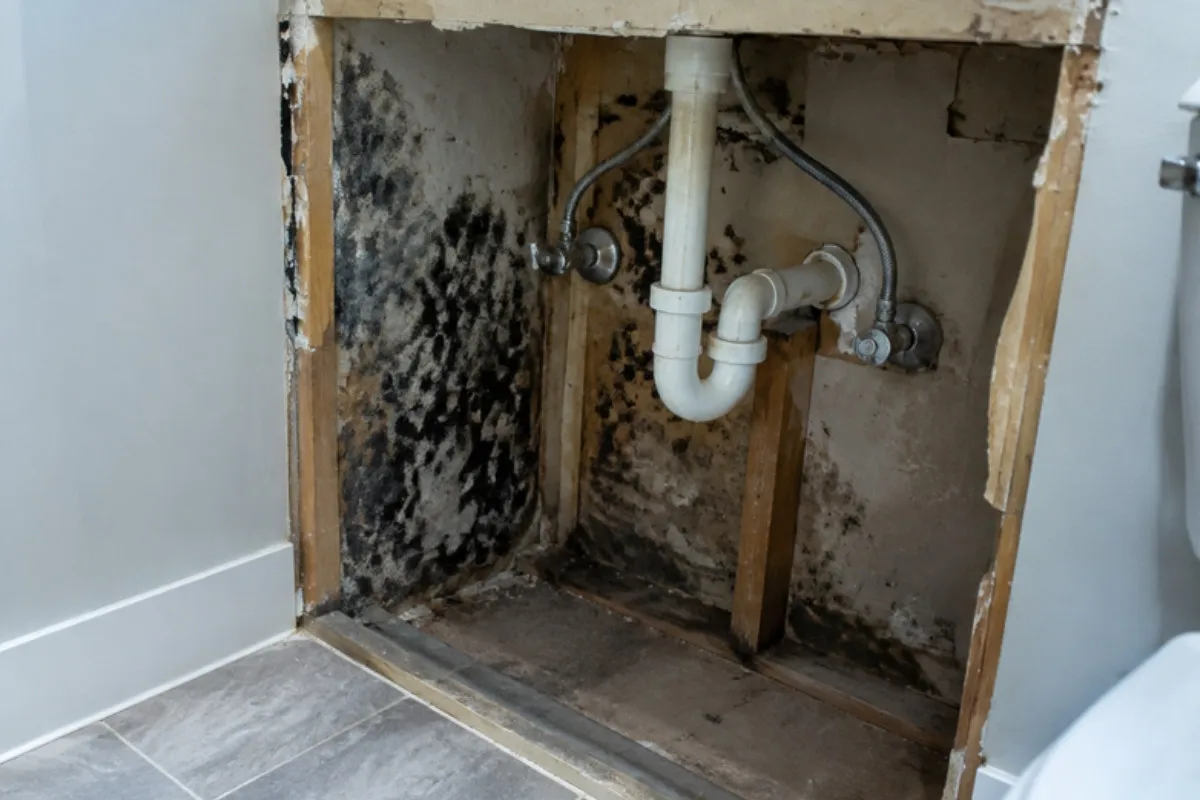
Dark mold on the Sammamish plateau
Sammamish spreads across a plateau about 14 miles east of Seattle, between Lake Sammamish on the west and the Snoqualmie Valley on the east, with Beaver Lake and Pine Lake inside city limits. King County says low ground around Lake Sammamish regularly floods landscaping and park facilities. For homes up in Klahanie, Sunny Hills and the neighborhoods off 228th Avenue, though, black growth is more often an indoor story: months of gray, wet weather, closed windows and surfaces that never quite dry.
What to do now
- Trace the moisture. Look above and behind the stain for a drip, a sweating pipe or a window that collects water every morning. Nothing else works until the source stops.
- Estimate the size. Washington DOH and EPA put the do-it-yourself limit at about 10 square feet. Past that, or if the growth runs behind drywall, plan on a professional.
- Don't sand or dry-brush it. Scraping dark growth off drywall sends spores into the rest of the house. Close the door to the room if you can.
- Skip the paint. EPA warns that paint or caulk over mold peels and leaves the growth feeding underneath.
- Take photos and notes. They help with an insurance claim and make it easier to compare written bids.
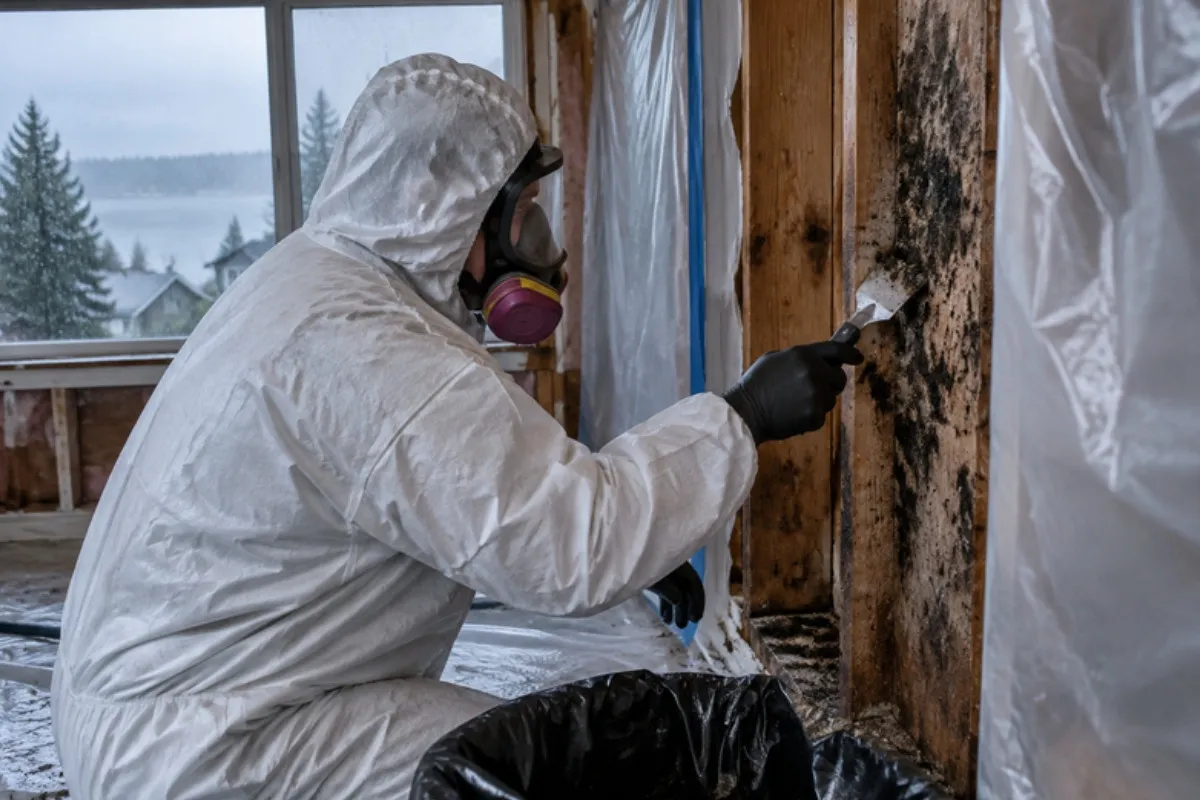
Where it shows up and why
| What you see | Likely cause |
|---|---|
| Black speckling across a bathroom ceiling | An exhaust fan that is too weak, unused, or not ducted outdoors |
| Dark bands on window frames and the wall under them | Winter condensation running off cold glass |
| Dark blotches on the back of a closet wall | A cold exterior wall with little air moving past it |
| Black staining on roof sheathing in the attic | Warm household air condensing on the underside of the roof |
| Stained baseboard and a musty smell near the kitchen sink | A slow leak under the cabinet or inside the wall |
What sets the price
Angi's Seattle cost guide reports an average remediation job of $1,988, with most between $1,008 and $2,967; most pros charge $10 to $25 per square foot. Black color doesn't raise the bill. Square footage, how much drywall or insulation is cut out, the containment and air filtration needed, attic or crawl space access, and the rebuild afterward all do. If walls are opened or framing is repaired, ask whether the work needs a permit through the City of Sammamish Permit Center. Before you sign, confirm the company is registered with Washington L&I as a construction contractor.
Black Mold Removal questions in Sammamish
Is black mold more dangerous than other kinds of mold?
Can I paint over black mold to seal it in?
Will the county health department look at black mold in my home?
Why does black mold come back on my window sills every winter?
More mold services in Sammamish
Black Mold Removal nearby
Sources
- Wikipedia: Sammamish, Washington
- King County: Flooding in the Sammamish watershed
- City of Sammamish: Permit Center
- King County: Environmental Health indoor air quality and mold consultations
- EPA: Mold Cleanup in Your Home
- EPA: A Brief Guide to Mold, Moisture and Your Home
- Washington State Department of Health: Mold
- Washington L&I: Verify a Contractor
- Angi: Mold Remediation Cost in Seattle
Last updated: